

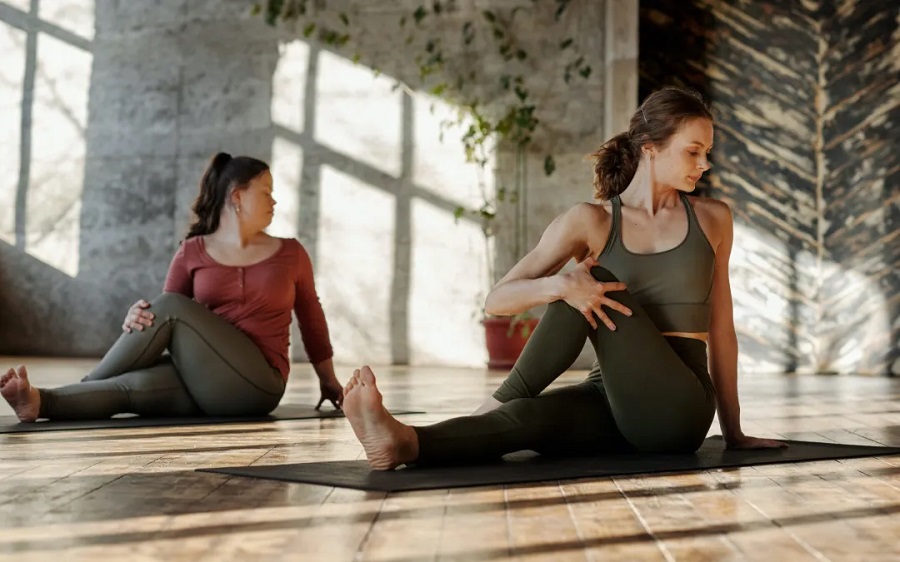
A quiet workplace class can provide a useful contrast to meetings, screens and constant task switching. However, simply dimming the lights and asking employees to lie still may create an unstructured rest period rather than a meaningful movement programme. A workplace yin yoga session needs clear objectives, purposeful positioning and an appropriate transition back to work.
Rest is not a poor outcome. The issue is whether the session delivers what the organisation and participants were told to expect.
Define Recovery in Practical Terms
Workplace recovery should not be presented as a cure for stress, pain or organisational problems. A yoga class cannot compensate for excessive workload, unsuitable equipment or a culture that prevents breaks.
A realistic programme can provide:
- Time away from screens.
- Varied positions after prolonged sitting.
- Practice noticing unnecessary tension.
- Supported movement at a manageable pace.
- An opportunity to slow breathing.
- Strategies employees can repeat independently.
These outcomes are specific enough to guide the session without making unsupported claims about productivity or healthcare savings.
Select a Suitable Time
Timing strongly influences alertness. A dark, quiet session immediately after lunch may increase sleepiness, while a late-evening workplace class may suit employees who are finishing for the day.
If participants need to return to focused work, the session should end with a gradual transition to sitting and standing. Brightening the room and including a few controlled movements can help participants reorient.
Singapore workplaces may also include shift patterns, hybrid attendance and long commutes. The timetable should reflect who can realistically participate rather than only when a meeting room is vacant.
A shorter well-attended programme may provide more value than a long session scheduled at an impractical time.
Use Holds With a Clear Purpose
Every position should relate to the programme objective. A supported fold might provide a different position for the hips and back after sitting. A gentle rotation may reintroduce movement absent during desk work.
The instructor should explain why a hold has been selected and how it can be adjusted. This keeps participants engaged without requiring constant talking.
A workplace sequence does not need numerous postures. A few accessible positions with clear transitions may be more effective than a complex routine.
Avoid Excessive Intensity
Employees may arrive with different movement histories, clothing and health considerations. Deep positions and strong sensations are unsuitable as a default.
Props, chairs and wall support can make the session more inclusive. Participants should be able to reduce range or rest without being singled out.
Long holds should remain comfortable enough for natural breathing. Tingling, numbness, sharp pain or increasing joint pressure are reasons to change position.
The instructor should provide alternatives before the class begins, not only after someone becomes uncomfortable.
Keep Participants Mentally Engaged
Yin practice does not require constant entertainment, but some guidance helps employees remain attentive to the experience.
The instructor can direct attention towards contact with the floor, changes in breathing and unnecessary muscular effort. They can also provide periodic reminders that participants may adjust the pose.
Silence can then be used intentionally rather than filling most of the session by default.
The goal is calm awareness, not forced wakefulness. If someone falls asleep briefly, it does not mean the programme has failed, but the session should contain more structure than a supervised nap.
Design the Environment Carefully
A corporate meeting room may have hard flooring, strong air conditioning and limited privacy. These conditions affect the class.
The organiser should confirm:
- Available floor space.
- Cleanliness and surface safety.
- Number of mats and props.
- Room temperature.
- Lighting control.
- Storage for shoes and belongings.
- Changing facilities.
- Privacy from passing colleagues.
- Emergency access.
Employees may not feel comfortable lying on the floor in work clothing. Chair-supported alternatives can increase participation.
The room should be set up before the class so that scheduled time is not lost moving furniture.
Protect Voluntary Participation
Workplace wellness should not become an informal performance assessment. Employees must be free to decline, modify or rest.
Managers should avoid commenting on flexibility, body shape or attendance. Health information should be shared confidentially with the instructor where necessary.
Participation data can be aggregated for programme evaluation. Individual movement or medical details should not be reported to management.
Psychological safety influences whether employees return.
Measure Programme Quality Appropriately
Attendance alone does not show whether the session is useful. Short voluntary feedback can assess:
- Relevance to the working day.
- Comfort with the pace.
- Suitability of timing.
- Confidence using modifications.
- Interest in repeating selected movements.
- Alertness after the session.
- Barriers to future attendance.
Employers should not promise productivity gains based on a small wellness programme. Feedback is better used to improve scheduling and delivery.
Create a Return-to-Work Transition
The final minutes deserve careful planning. Participants who have spent time in supported floor positions should not be rushed to stand and return immediately to a screen.
A transition might include gentle movement, sitting upright, standing with support and taking a short walk or water break.
Employees should have time to put away props and reorganise clothing without feeling late for the next meeting.
This operational buffer is part of the programme.
Build a Workplace Format With Purpose
At Yoga Edition, organisations can approach Yin practice as a structured low-movement format rather than an undefined relaxation event. Clear objectives and appropriate instruction make it easier for employees to understand what the session offers.
A useful workplace class provides supported movement, deliberate pauses and practical skills that participants can revisit during demanding weeks.
Naptime is avoided not by making the session busier, but by giving stillness a purpose. When positioning, attention and the return to work are designed carefully, Yin yoga can function as a credible recovery format within a professional environment.

Comments are closed.